Ayurvedic Care for Back Pain in Abu Dhabi
Kati Vasti, warm oil massage and Kizhi therapies for a stiff or aching back.
Book Your Consultation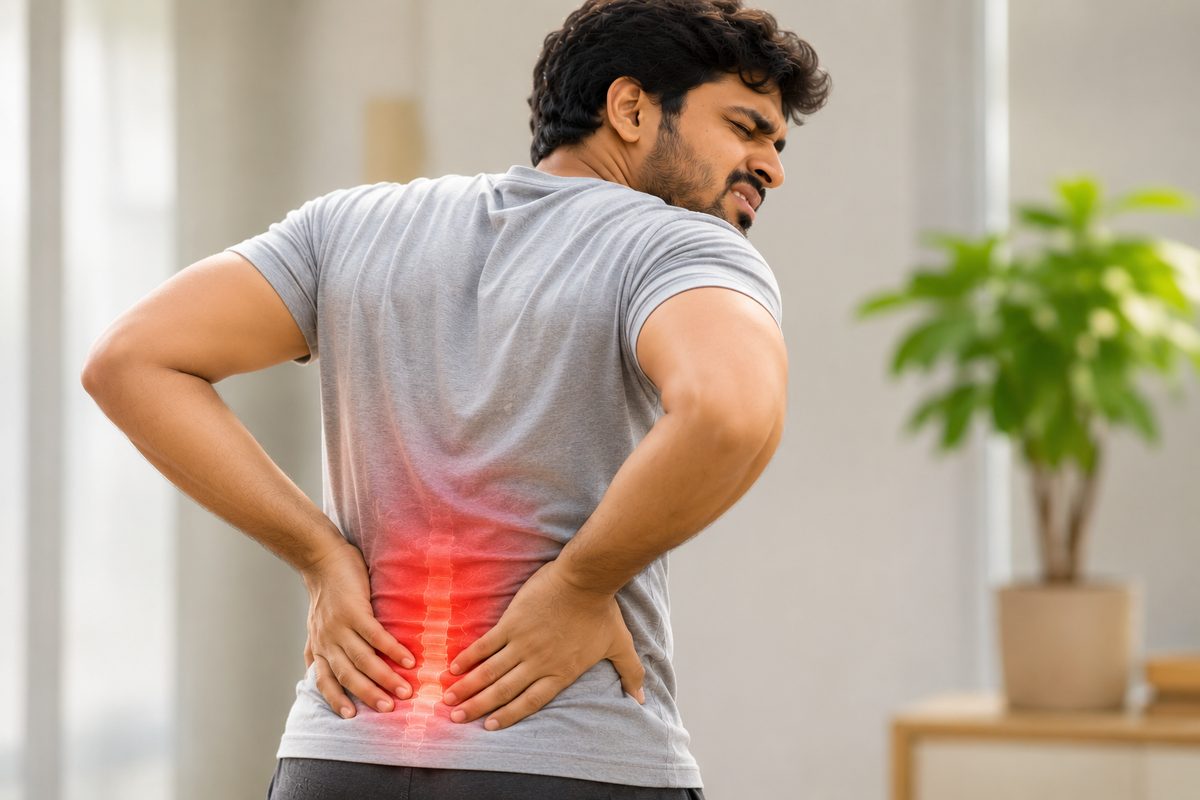
Back pain is a common concern that can affect people of different ages and activity levels. Long hours of sitting, driving, physical work, lifting, muscle strain and changes in spinal structures can contribute to discomfort. Depending on its cause, back pain may affect the lower back, middle back or upper back and can interfere with walking, working, sleeping and everyday activities.
At Vayra Ayurvedic Medical Center in Abu Dhabi, traditional Ayurvedic therapies may be considered as complementary wellness practices after an assessment of your symptoms and medical history. Available options include Kati Vasti, Abhyangam, Elakizhi and Pichu, depending on individual suitability.
If you are exploring Ayurvedic treatment for back pain in Abu Dhabi, an initial consultation can help you understand the traditional therapies available alongside appropriate medical care and physiotherapy.
Traditional Ayurvedic therapies are not proven cures for spinal disorders, slipped discs, nerve compression or chronic back conditions. Identifying the cause of persistent or severe back pain is important before choosing any treatment.
Understanding Back Pain
Back pain refers to discomfort or pain experienced anywhere along the back, from the neck and shoulders to the lower spine.
Lower-back pain is particularly common because the lumbar region supports much of the body's weight and is involved in everyday movements such as bending, lifting, sitting and walking.
Back pain may be:
- Acute: Short-term pain that may develop after a strain or sudden movement.
- Subacute: Pain that continues for several weeks.
- Chronic: Pain that persists for more than three months.
Some people experience localised muscular discomfort, while others may have pain that travels into the buttocks or legs. Symptoms and appropriate care depend on the underlying cause.
Common Symptoms of Back Pain
Back pain can present differently from one person to another.
Common symptoms include:
- Aching or stiffness in the lower back
- Muscle tightness around the spine
- Discomfort when bending or twisting
- Pain after prolonged sitting or standing
- Difficulty getting comfortable while sleeping
- Reduced flexibility and movement
- Discomfort while lifting or carrying objects
- Pain that spreads towards the buttocks or legs
- Muscle spasms or tenderness
Pain that travels down a leg, particularly with tingling, numbness or weakness, may indicate nerve involvement such as sciatica. A medical assessment can help identify the cause.
Common Causes of Back Pain
Back pain can have several causes. Understanding the possible source helps guide appropriate care.
1. Muscle Strain
Muscle strain can occur after lifting heavy objects, sudden movements, excessive exercise or physical work. It may cause localised pain, tenderness and stiffness.
2. Prolonged Sitting
Sitting for extended periods without changing position may contribute to discomfort and stiffness, especially when combined with limited physical activity.
3. Poor Lifting Technique
Repeatedly lifting heavy objects, particularly while twisting, may strain muscles and other structures in the back.
4. Disc-Related Conditions
Spinal discs act as cushions between the vertebrae. Disc degeneration or a herniated disc may contribute to back pain and, in some cases, nerve-related symptoms.
5. Age-Related Spinal Changes
Changes in spinal joints, discs and surrounding structures may develop with age. Not all age-related changes cause pain, so clinical assessment is important.
6. Sciatica and Nerve Irritation
Sciatica involves pain associated with irritation or compression of nerve roots in the lower spine. Symptoms can travel from the lower back into the buttock and leg.
7. Reduced Physical Activity
Limited movement and reduced muscle conditioning may affect physical capacity and contribute to recurring discomfort.
8. Other Medical Conditions
Back pain can occasionally be associated with infection, fracture, inflammatory conditions or other medical problems. Persistent, severe or unusual symptoms should be assessed by a healthcare professional.
Ayurvedic Perspective on Back Pain
Traditional Ayurveda describes certain back and movement-related discomfort through concepts such as Vata. Traditional approaches may include warm oil applications, massage, herbal bolus procedures and guidance on daily routines.
At Vayra Ayurvedic Medical Center, traditional therapies are selected according to individual assessment, medical history, symptoms and suitability.
These traditional concepts do not replace modern medical diagnosis. Back pain caused by a fracture, infection, spinal stenosis, disc herniation or another structural condition may require specific medical treatment.
Ayurvedic Therapies for Back Pain at Vayra
The following four therapies are listed on the Vayra website and may be discussed after individual assessment.
1. Kati Vasti – Traditional Lower-Back Oil Therapy
Kati Vasti is a traditional Ayurvedic procedure in which warm medicated oil is retained over the lower-back region using a specially prepared dough ring.
The procedure focuses on the lumbar area and is traditionally used as a local external therapy.
At Vayra, Kati Vasti may be considered as a complementary wellness option for suitable individuals experiencing lower-back discomfort or stiffness.
The procedure does not repair damaged spinal discs, correct vertebral alignment or remove nerve compression. People with recent injuries, altered skin sensation or unexplained severe back pain should receive appropriate medical assessment before considering this therapy.
2. Abhyangam – Traditional Full-Body Oil Massage
Abhyangam is a traditional Ayurvedic full-body massage using warm herbal oil and appropriate massage movements.
It is commonly considered as a relaxation and general wellness practice.
For individuals experiencing back discomfort, massage pressure and technique should be adapted to their condition and comfort.
Forceful massage or spinal manipulation should not be used as a substitute for medical evaluation, particularly when symptoms include numbness, weakness or pain radiating into the leg.
3. Elakizhi – Traditional Herbal Leaf Bolus Therapy
Elakizhi is a traditional Ayurvedic procedure using boluses prepared with selected medicinal leaves and other ingredients.
The warm boluses are applied over selected body areas using traditional movements.
It is traditionally included in wellness programmes for people experiencing muscular stiffness and discomfort.
The application temperature and pressure should be adjusted according to individual tolerance. Avoid applying heat over areas with reduced sensation, acute injury, swelling or irritated skin without appropriate medical advice.
4. Pichu – Traditional Warm Oil Application
Pichu is a traditional Ayurvedic procedure in which a pad or piece of cloth soaked in warm medicated oil is placed over a selected area of the body.
For lower-back discomfort, the pad may be positioned over the lumbar region according to practitioner assessment.
Pichu is traditionally used as a local external oil application.
The oil temperature, duration and application area should be selected according to individual comfort and health history. It should not be used to delay medical evaluation of severe or unexplained pain.
How Your Back Care Is Planned at Vayra
Vayra follows an individual consultation and therapy-selection process.
Step 1: Initial Consultation
The practitioner discusses your symptoms, medical history, previous diagnosis, current medicines, treatment goals and individual requirements.
Step 2: Individual Assessment
Your comfort, condition and suitability for traditional therapies are considered. Symptoms that may require further medical investigation should be referred for appropriate assessment.
Step 3: Treatment Selection
Depending on your individual requirements, Kati Vasti, Abhyangam, Elakizhi or Pichu may be discussed.
Step 4: Traditional Therapy
The selected procedure is performed using appropriate traditional techniques, preparations and professional supervision.
Step 5: Post-Treatment Guidance
You may receive general guidance regarding daily routines, movement, relaxation and follow-up care. Any exercise or rehabilitation programme should be coordinated with your doctor or physiotherapist.
Treatment duration, frequency and suitability depend on individual requirements. No specific recovery result can be guaranteed.
Can Ayurvedic Therapies Be Combined With Physiotherapy?
Physiotherapy and appropriate physical activity are important parts of managing many types of back pain.
A physiotherapist may recommend:
- Individualised back-strengthening exercises
- Mobility and flexibility exercises
- Gradual return to everyday activities
- Movement and lifting guidance
- Posture and workstation adjustments
- Activity modification according to symptoms
Traditional Ayurvedic therapies may be considered as complementary wellness practices when appropriate and when they do not interfere with rehabilitation.
Discuss any massage or traditional therapy with your treating healthcare professional. Do not replace prescribed treatment or recommended exercises with traditional procedures.
Lifestyle Tips for Maintaining Back Health
Everyday habits can support movement, physical function and general wellbeing.
Take Regular Movement Breaks
If you sit for long hours at work, change positions regularly and take short walking breaks.
Maintain Suitable Posture
Adjust your chair, desk and screen to a comfortable position. Avoid remaining in one posture for prolonged periods.
Use Appropriate Lifting Techniques
Keep objects close to your body when lifting and avoid sudden twisting movements. Ask for help when handling heavy items.
Stay Physically Active
Walking and suitable strengthening exercises can support general back health. Choose activities according to your ability and any medical advice you have received.
Follow Professional Exercise Guidance
A physiotherapist can recommend suitable exercises according to the cause of your back pain. Do not force movements that worsen symptoms or produce new numbness or weakness.
Maintain a Healthy Weight
A balanced diet and suitable physical activity support general health and mobility.
Pay Attention to Sleep Comfort
Choose a comfortable sleeping position and mattress that allows you to rest. Persistent pain that interrupts sleep should be medically assessed.
When Should You Seek Medical Advice?
Most back pain does not indicate a medical emergency, but some symptoms require prompt attention.
Seek emergency medical care immediately if you experience:
- New difficulty starting urination or inability to pass urine
- Loss of bladder or bowel control
- Numbness around the genitals, anus or inner thighs
- Severe or worsening weakness in both legs
- Significant neurological symptoms affecting both legs
These may indicate cauda equina syndrome or another serious spinal problem.
Seek prompt medical assessment if back pain:
- Begins after a major fall or accident
- Occurs with fever or chills
- Is accompanied by unexplained weight loss
- Is severe, persistent or progressively worsening
- Occurs with a history of cancer
- Is associated with new or worsening leg weakness or numbness
- Does not improve or repeatedly interferes with everyday activities
Do not delay medical care to try massage or traditional therapies.
Why Consider Vayra Ayurvedic Medical Center in Abu Dhabi?
Vayra Ayurvedic Medical Center brings Kerala's traditional Ashta Vaidya healing heritage to Abu Dhabi.
The centre offers traditional Ayurvedic therapies and an individual consultation process for people interested in complementary wellness practices.
You can explore:
- Traditional Kati Vasti lower-back oil therapy
- Abhyangam full-body oil massage
- Elakizhi herbal leaf bolus therapy
- Pichu warm oil application
- Individual consultation and therapy selection
- Traditional external wellness procedures
- Guidance based on individual requirements
The centre's approach considers your health history, symptoms, comfort and suitability before discussing traditional therapies.
Therapies and Packages for Back Pain
Book a Back Care Consultation in Abu Dhabi
If you have received an appropriate medical assessment and are interested in complementary traditional Ayurvedic therapies, contact Vayra Ayurvedic Medical Center to learn more about its services.
Speak with the team to discuss whether Kati Vasti, Abhyangam, Elakizhi or Pichu may be suitable alongside your existing medical or physiotherapy plan.
Book Your AppointmentFrequently Asked Questions
Which Ayurvedic therapies are available for back pain at Vayra?
Vayra lists Kati Vasti, Abhyangam, Elakizhi and Pichu as traditional therapies that may be considered following individual assessment.
What is Kati Vasti treatment?
Kati Vasti is a traditional Ayurvedic procedure in which warm medicated oil is retained over the lower back using a specially prepared dough ring.
Can Ayurvedic treatment cure chronic back pain?
There is no reliable basis to claim that traditional Ayurvedic therapies cure chronic back pain or correct underlying spinal conditions. They may be considered as complementary wellness practices alongside appropriate medical care.
Is Kati Vasti suitable for a slipped disc?
A person with a diagnosed slipped disc should consult their treating doctor before considering Kati Vasti. It does not repair a herniated disc or remove nerve compression.
What is the difference between Elakizhi and Pichu?
Elakizhi uses warm boluses containing medicinal leaves, which are applied over selected body areas. Pichu uses a warm oil-soaked pad placed over a selected area.
Can Abhyangam help with back stiffness?
Abhyangam is a traditional full-body oil massage commonly considered for relaxation and general wellness. Its suitability depends on the individual's symptoms and medical condition.
Can I combine Ayurvedic therapy with physiotherapy?
Some traditional therapies may be considered as complementary wellness practices alongside physiotherapy. Discuss the plan with your treating physiotherapist and healthcare professional first.
How many sessions are required for back pain?
There is no universal session schedule. Frequency and suitability depend on the underlying condition, symptoms and individual assessment. No specific recovery result can be guaranteed.
Do I need an MRI scan for back pain?
Not everyone with back pain requires an MRI. A doctor decides whether imaging is necessary based on symptoms, examination findings and possible warning signs.
Can prolonged sitting cause lower-back pain?
Prolonged sitting may contribute to back discomfort and stiffness. Regular movement breaks, suitable workstation adjustments and appropriate physical activity can help support back health.
When should I seek urgent medical care for back pain?
Seek emergency care for new bladder or bowel problems, numbness around the groin or anus, or severe or worsening weakness in both legs.
Where can I find traditional Ayurvedic back care in Abu Dhabi?
Vayra Ayurvedic Medical Center is located at Green Tower Building, B Block, 4th Floor, Khalifa Street, opposite NBD Bank, Abu Dhabi, UAE.
Individual experiences and outcomes vary. Ayurvedic therapies are offered as traditional wellness practices and may be considered alongside appropriate medical care.