Ayurvedic Care for Sports Injuries in Abu Dhabi – Traditional Therapies for Muscle & Joint Recovery
Kizhi and Vasti therapies for muscle stiffness and recovery, once an injury has been assessed.
Book Your Consultation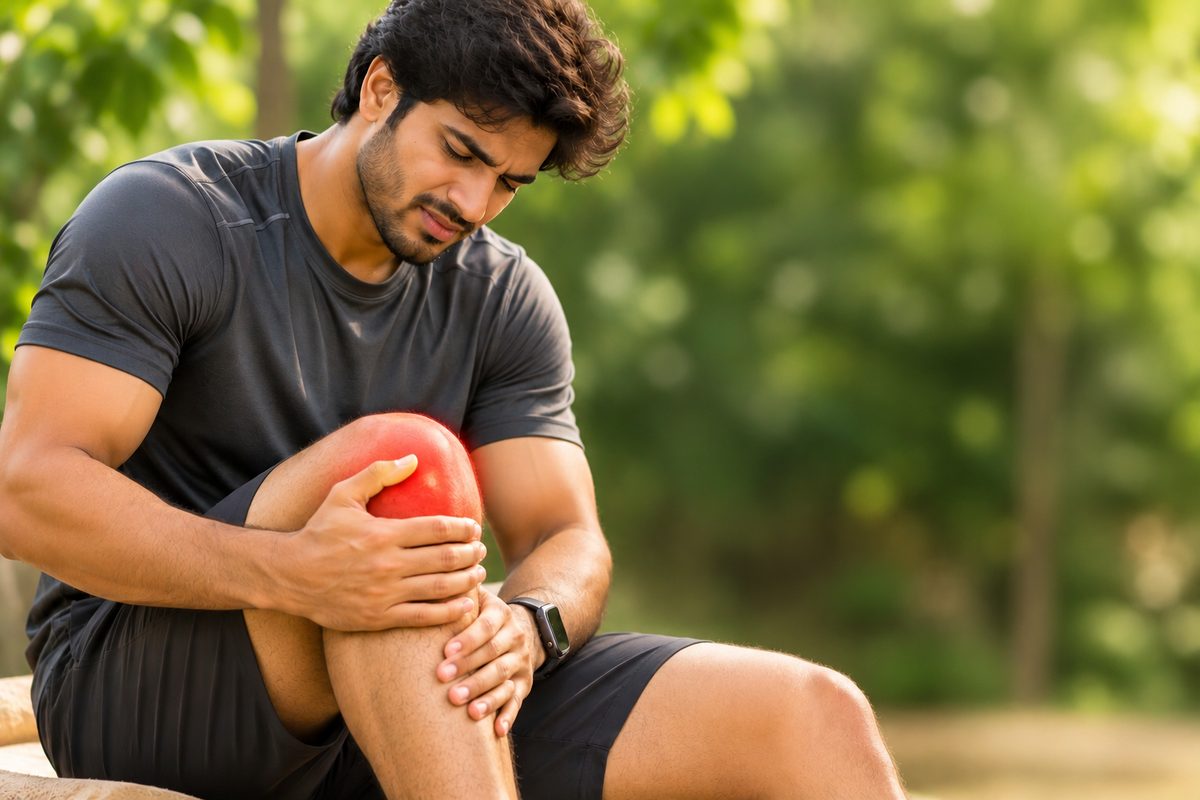
Sports and physical activities are important for maintaining an active lifestyle. However, running, gym workouts, cycling, football, cricket and other physical activities can sometimes lead to muscle strains, ligament sprains, joint discomfort and overuse injuries.
Sports injuries can affect muscles, tendons, ligaments and joints. Depending on their severity, they may require medical assessment, physiotherapy, rehabilitation or other treatment.
At Vayra Ayurvedic Medical Center in Abu Dhabi, traditional Ayurvedic therapies may be considered as complementary wellness practices after an injury has been properly assessed. Available options include Elakizhi, Podikizhi, Kati Vasti, Greeva Vasti and Dhanyamla Dhara, subject to individual suitability.
If you are exploring Ayurvedic care for sports injuries in Abu Dhabi, an initial consultation can help you understand the traditional therapies available alongside your existing medical or rehabilitation plan.
Understanding Sports Injuries
Sports injuries can occur during exercise, training, competitions or everyday physical activities. Some develop suddenly following a fall or twisting movement, while others develop gradually through repetitive stress or overtraining.
Common sports injuries include:
- Muscle strains
- Ligament sprains
- Muscle soreness and stiffness
- Tendon-related injuries
- Joint discomfort
- Lower-back strain
- Neck and shoulder muscle tension
- Overuse injuries
- Sports-related bruising
The type and severity of an injury determine the appropriate treatment. Some injuries need medical examination or imaging to rule out fractures, dislocations or significant tissue damage.
Common Types of Sports Injuries
1. Muscle Strains
A muscle strain occurs when a muscle or tendon is overstretched or torn. It may happen during sprinting, jumping, lifting weights or sudden changes in direction.
Common symptoms include pain, tenderness, swelling, muscle weakness and difficulty using the affected area.
2. Ligament Sprains
A sprain involves stretching or tearing a ligament, which connects bones around a joint.
Ankle, knee and wrist sprains are common in sports. Symptoms may include joint pain, swelling, bruising and difficulty moving or bearing weight.
3. Muscle Stiffness and Soreness
Muscle stiffness can develop after unfamiliar exercise, increased training intensity or repeated physical activity.
Mild post-exercise soreness is different from an acute injury. Sharp pain, significant swelling or reduced function should not be dismissed as ordinary muscle soreness.
4. Tendon-Related Injuries
Tendons connect muscles to bones. Repetitive movements, sudden increases in training or excessive loading may contribute to tendon irritation and injury.
Examples include Achilles tendon problems and shoulder tendon injuries.
5. Joint Injuries
Sports activities may place stress on the knees, ankles, shoulders, wrists and other joints. Some injuries involve ligaments, cartilage or other structures and require medical assessment.
Common Causes of Sports Injuries
1. Insufficient Warm-Up
Beginning intense exercise without preparing the body may increase the risk of certain injuries.
2. Overtraining
Training too frequently or increasing exercise intensity too quickly may place excessive stress on muscles, tendons and joints.
3. Incorrect Exercise Technique
Poor lifting techniques, unsuitable running mechanics or incorrect sports movements may contribute to injury.
4. Inadequate Recovery
Insufficient rest between training sessions may prevent the body from recovering adequately.
5. Muscle Fatigue
Tired muscles may affect movement control and coordination, increasing the possibility of injury.
6. Unsuitable Equipment
Incorrect footwear, inadequate protective equipment or unsuitable training surfaces may contribute to sports-related injuries.
7. Previous Injuries
Returning to intense physical activity before recovering adequately may increase the risk of reinjury.
Ayurvedic Perspective on Sports Injury Wellness
Traditional Ayurveda includes external therapies such as herbal bolus applications, warm oil procedures and massage as part of its approach to physical wellbeing.
These practices may be considered for general comfort and relaxation during an appropriate stage of recovery.
At Vayra Ayurvedic Medical Center, therapy selection is based on individual assessment, injury history, current symptoms and professional recommendations.
Traditional Ayurvedic therapies are not substitutes for fracture management, ligament repair, sports medicine treatment or physiotherapy. The timing of any warm therapy or massage is particularly important after an acute injury.
Ayurvedic Therapies for Sports Injuries at Vayra
The following five therapies are listed on the Vayra website and may be discussed after an appropriate assessment.
1. Elakizhi – Traditional Herbal Leaf Bolus Therapy
Elakizhi is a traditional Ayurvedic procedure using warm boluses prepared with medicinal leaves.
The boluses are applied rhythmically over selected areas of the body using a traditional technique.
Elakizhi is traditionally included in wellness programmes for people experiencing muscular stiffness and discomfort.
It may be considered after an acute injury has been medically assessed and the practitioner determines that warmth and massage are appropriate.
It should not be performed over a fresh injury with significant swelling, bleeding or suspected tissue damage.
2. Podikizhi – Traditional Herbal Powder Bolus Therapy
Podikizhi is a traditional Ayurvedic procedure using boluses filled with prepared herbal powders.
The warm boluses are applied with specific movements over selected body areas.
This procedure is traditionally used as an external wellness therapy for people experiencing muscular stiffness and general body discomfort.
The pressure, temperature and application area should be adjusted according to individual comfort and suitability.
3. Kati Vasti – Traditional Lower-Back Oil Therapy
Kati Vasti is a traditional Ayurvedic procedure in which warm medicated oil is retained over the lower-back region using a specially prepared dough ring.
It is traditionally used as a local external therapy focused on the lower back.
For sports participants experiencing lower-back discomfort, its suitability should be considered only after an appropriate assessment.
Kati Vasti is not a treatment for spinal fractures, disc injuries or nerve compression.
4. Greeva Vasti – Traditional Neck Oil Therapy
Greeva Vasti involves retaining warm medicated oil over the back of the neck within a specially prepared dough ring.
It is traditionally used as a local external therapy for the neck region.
For people experiencing neck or shoulder tension after physical activity, it may be discussed after assessment.
Avoid this procedure following a neck injury until a healthcare professional has ruled out serious damage and confirmed that the procedure is appropriate.
5. Dhanyamla Dhara – Traditional Herbal Liquid Therapy
Dhanyamla Dhara is a traditional Ayurvedic procedure involving the steady application of a warm fermented herbal liquid over selected body areas.
It is traditionally included in certain external therapy programmes.
The preparation, application area and temperature should be determined according to individual requirements.
It should not be presented as a proven treatment for muscle tears, ligament injuries or acute inflammation.
When Is It Appropriate to Consider Traditional Ayurvedic Therapies?
The stage and nature of an injury matter.
A fresh injury with swelling, bruising, pain or reduced movement needs appropriate first aid and medical assessment when indicated. Warm therapies and massage are generally avoided during the early acute stage of a sprain or strain because they may aggravate swelling.
After the injury has been assessed and the acute symptoms have settled, a healthcare professional may advise whether complementary therapies are appropriate.
The decision should consider:
- The type of injury
- How long ago it occurred
- Current pain and swelling
- Whether a fracture or serious tear has been excluded
- Current mobility and function
- Existing medical treatment
- Advice from the treating doctor or physiotherapist
Do not use a traditional therapy to test whether an injured joint or muscle is ready for exercise.
How Your Sports Injury Care Is Planned at Vayra
Vayra follows an individual consultation and therapy-selection process.
Step 1: Initial Consultation
The practitioner discusses your injury history, symptoms, medical diagnosis, current treatment and individual requirements.
Step 2: Individual Assessment
Your condition, comfort and suitability for traditional therapies are considered. If further medical assessment is needed, this should take priority.
Step 3: Treatment Selection
Depending on individual suitability, therapies such as Elakizhi, Podikizhi, Kati Vasti, Greeva Vasti or Dhanyamla Dhara may be discussed.
Step 4: Traditional Therapy
The selected procedure is performed using appropriate traditional techniques, preparations and professional supervision.
Step 5: Post-Treatment Guidance
You may receive general guidance about daily routines, comfort and follow-up care. Rehabilitation and return-to-sport decisions should remain coordinated with your doctor or physiotherapist.
Treatment duration, frequency and suitability depend on individual requirements.
Can Ayurvedic Therapies Be Combined With Physiotherapy?
Physiotherapy is an important part of recovery for many sports injuries. Depending on the injury, a rehabilitation plan may include mobility exercises, strengthening, balance training and gradual sport-specific activities.
Traditional Ayurvedic therapies may be discussed as complementary wellness practices when the treating healthcare professional considers them appropriate.
If you are receiving physiotherapy, inform both practitioners about the therapies and treatments you are undergoing.
Do not replace prescribed rehabilitation exercises with massage or traditional procedures. Returning to sport should depend on recovery of strength, movement, function and sport-specific ability, not simply a reduction in pain.
Tips to Support Sports Injury Prevention
Warm Up Before Exercise
Begin with gentle movement and activity-specific preparation before increasing exercise intensity.
Increase Training Gradually
Avoid sudden increases in training duration, distance, weight or intensity. Allow your body time to adapt.
Use Suitable Equipment
Choose appropriate footwear, protective equipment and training surfaces for your activity.
Maintain Proper Technique
Use correct movement and lifting techniques. Seek coaching or professional advice if you are unsure about exercise form.
Allow Recovery Time
Include suitable rest and recovery between demanding training sessions.
Strengthen Supporting Muscles
Appropriate strength and conditioning exercises can improve physical capacity and support sports performance.
Avoid Training Through Injury Pain
Stop activities that cause sharp or increasing pain. Continuing to train through an injury may worsen the problem.
When Should You Seek Medical Advice?
Seek medical assessment before considering traditional therapies if you have:
- Suspected fracture or dislocation
- Severe pain or rapidly increasing swelling
- Significant bruising
- Inability to walk or bear weight
- A joint that feels unstable or gives way
- Restricted movement after an injury
- Persistent numbness or tingling
- An injury that is not improving
Seek urgent medical attention if the injured body part changes shape, becomes cold or blue, or develops numbness or pins and needles. These may indicate a serious injury or circulation problem.
A suspected head, neck or spinal injury also requires urgent medical assessment. Do not move someone with a suspected serious spinal injury unnecessarily.
Why Consider Vayra Ayurvedic Medical Center in Abu Dhabi?
Vayra Ayurvedic Medical Center brings Kerala's traditional Ashta Vaidya healing heritage to Abu Dhabi.
The centre offers traditional Ayurvedic procedures and an individual consultation process for people interested in complementary wellness practices.
You can explore:
- Traditional Elakizhi therapy
- Podikizhi herbal powder bolus therapy
- Kati Vasti and Greeva Vasti
- Dhanyamla Dhara
- Individual consultation and therapy selection
- Traditional external wellness procedures
- Guidance based on individual requirements
The centre's approach considers injury history, health status, comfort and suitability before discussing traditional therapies.
Therapies and Packages for Sports Injuries
Book a Sports Injury Wellness Consultation in Abu Dhabi
If you have completed the necessary medical assessment and are interested in complementary traditional Ayurvedic therapies, contact Vayra Ayurvedic Medical Center to learn more about its services.
Speak with the team to discuss whether Elakizhi, Podikizhi, Kati Vasti, Greeva Vasti or Dhanyamla Dhara may be suitable alongside your existing recovery plan.
Book Your AppointmentFrequently Asked Questions
Which Ayurvedic therapies are available for sports injuries at Vayra?
Vayra lists Elakizhi, Podikizhi, Kati Vasti, Greeva Vasti and Dhanyamla Dhara as traditional therapy options. Suitability depends on the type and stage of the injury.
Can I undergo Ayurvedic treatment immediately after a sports injury?
Not necessarily. Warm therapies and massage are generally avoided during the first few days of a fresh sprain or strain. Medical assessment and appropriate first aid should come first.
What is Elakizhi treatment?
Elakizhi is a traditional Ayurvedic procedure using warm boluses prepared with medicinal leaves. It is traditionally applied to selected areas using rhythmic movements.
What is Podikizhi treatment?
Podikizhi is a traditional Ayurvedic procedure using warm herbal powder boluses applied over selected body areas.
What is the difference between Elakizhi and Podikizhi?
Elakizhi uses boluses prepared with medicinal leaves, whereas Podikizhi uses boluses containing herbal powders. Both are traditional external Ayurvedic procedures.
Can Kati Vasti be considered for sports-related back discomfort?
Kati Vasti is a traditional lower-back oil-retention procedure. It may be discussed after medical assessment, but it is not a treatment for spinal fractures, disc injuries or nerve compression.
Can Greeva Vasti be considered for sports-related neck discomfort?
Greeva Vasti is a traditional neck oil-retention procedure. It should only be considered after an appropriate assessment, particularly if the neck discomfort followed an injury.
Can Ayurvedic therapies be combined with physiotherapy?
Some traditional therapies may be considered as complementary wellness practices alongside physiotherapy, subject to approval and coordination with the treating healthcare professional.
How many sessions are required for sports injury recovery?
There is no fixed number of sessions. Suitability and frequency depend on the type of injury, recovery stage and individual requirements. No specific recovery outcome can be guaranteed.
Where can I find traditional Ayurvedic sports injury care in Abu Dhabi?
Vayra Ayurvedic Medical Center is located at Green Tower Building, B Block, 4th Floor, Khalifa Street, opposite NBD Bank, Abu Dhabi, UAE.
Individual experiences and outcomes vary. Ayurvedic therapies are offered as traditional wellness practices and may be considered alongside appropriate medical care.